The Coho salmon, also called silver salmon, is a favorite among anglers for its striking appearance, strong fight, and seasonal migrations. Here’s a quick breakdown of the seven key traits you need to know about this iconic species:
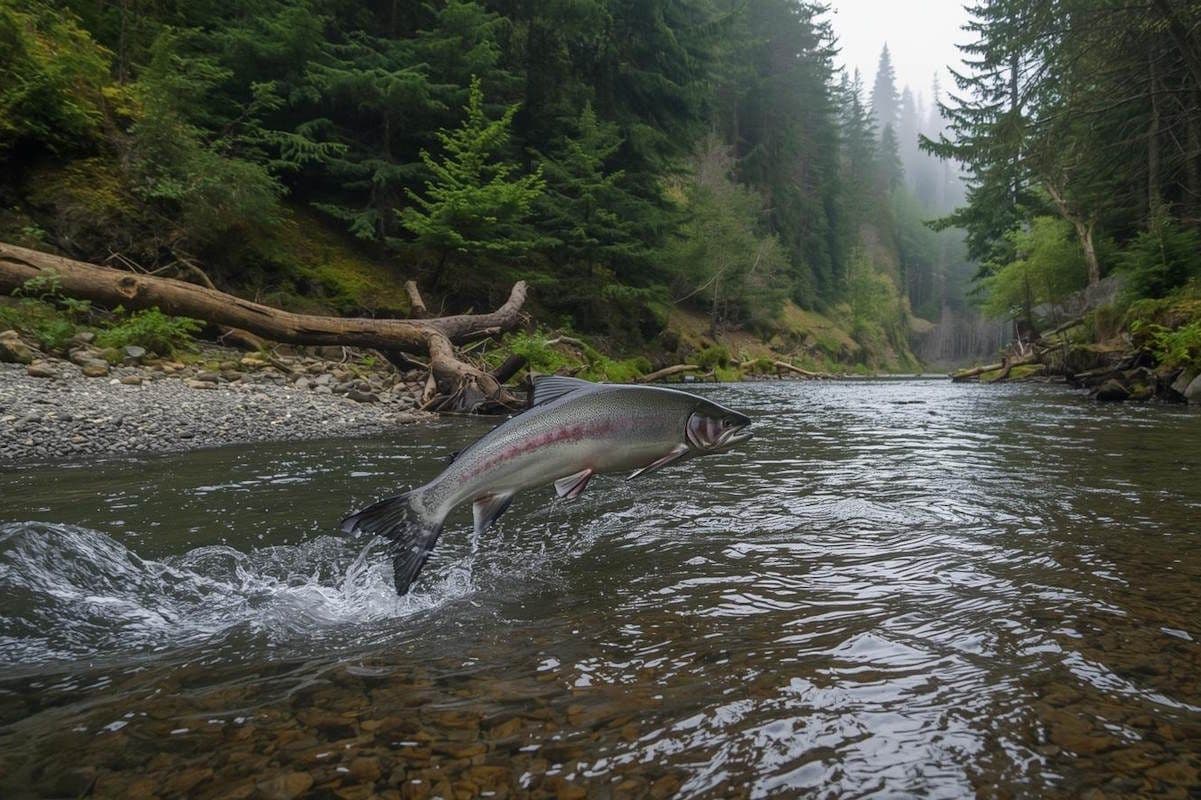
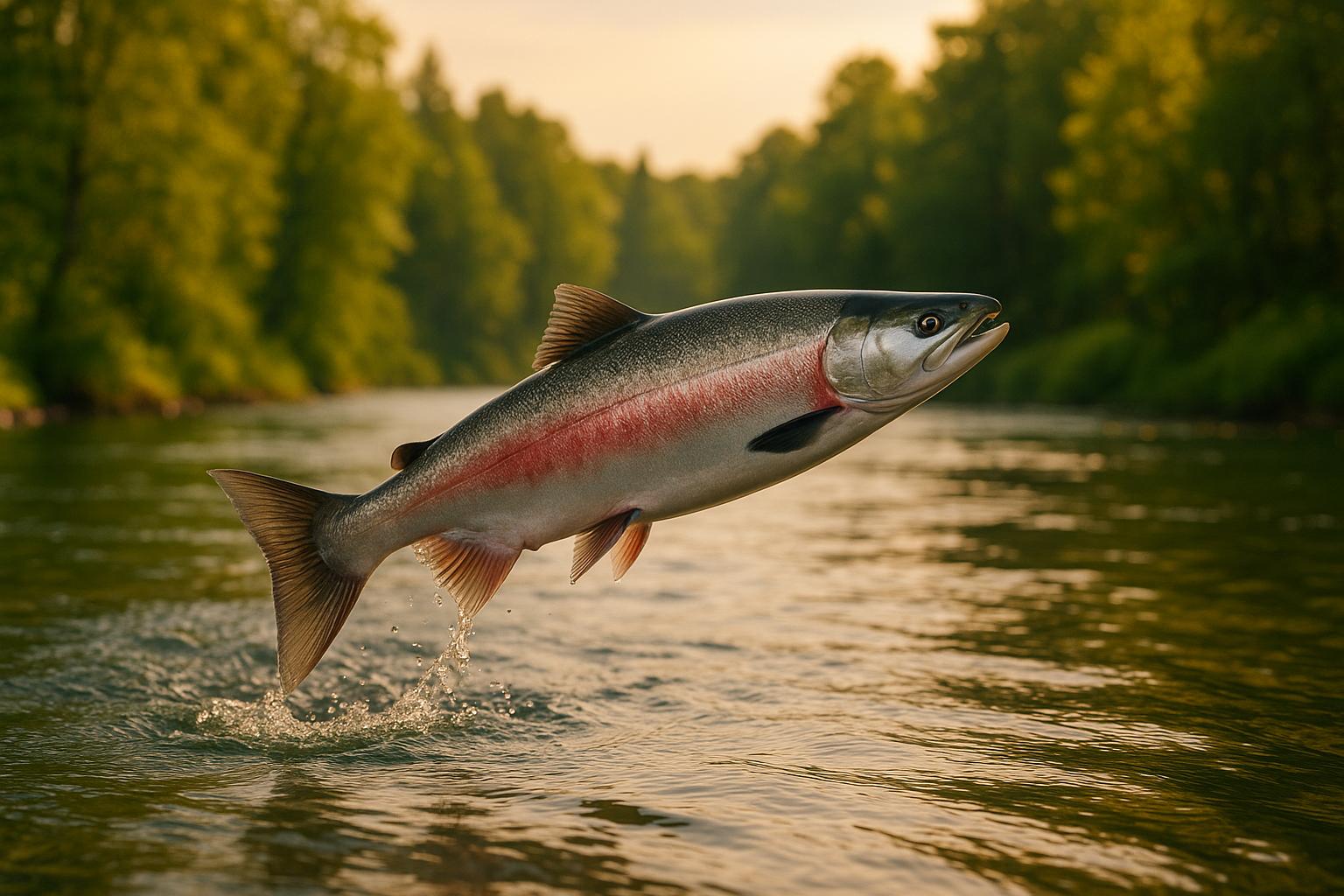
- Appearance: Coho salmon have silver sides, dark metallic blue or greenish backs, and small black spots on the upper lobe of their tail. During spawning, they turn reddish-maroon, with males developing hooked snouts and large teeth.
- Size: Adults typically measure 24–30 inches and weigh 8–12 pounds. Trophy specimens can exceed 20 pounds, with some record-breaking catches over 30 pounds.
- Habitat: Found along the Pacific Coast from Alaska to California, they also thrive in introduced waters like the Great Lakes. Habitat preferences shift with their lifecycle.
- Lifecycle: Coho are anadromous, migrating from freshwater to saltwater and back to spawn. Females lay eggs in gravel nests, with young salmon developing in streams before heading to the ocean.
- Diet: Juveniles eat insects and plankton, while adults in the ocean prey on small fish and squid. Coho are aggressive feeders, making them exciting to catch.
- Identification: Look for white gums, small black tail spots (upper lobe only), and their distinctive spawning colors. Juveniles have parr marks in freshwater.
- Fishing Tips: Best times are dawn, dusk, and late summer through fall. Use pink-colored lures or bait like herring. In the ocean, they’re often found near the surface in schools.
Understanding these traits will help you target Coho salmon more effectively, whether you’re fishing along the Pacific Coast or in the Great Lakes region.
Top 10 Coho Salmon Fishing Tips (Do NOT Forget #1)
1. Body Shape and Color
The shape and color of Coho salmon offer a glimpse into their life stage and adaptation. These features evolve as the fish transition between freshwater and saltwater environments, providing key identification markers. Here’s how their appearance changes during different stages of life.
Ocean Phase: The "Silver Salmon" Appearance
When Coho salmon enter saltwater, they are often referred to as "silver salmon" due to their striking coloration. According to NOAA Fisheries:
Commonly called silver salmon, coho have dark metallic blue or greenish backs with silver sides and a light belly.
This color scheme serves as effective camouflage in open water. Additionally, they exhibit a unique spotting pattern. NOAA Fisheries highlights:
While they are in the ocean, they have small black spots on their back and on the upper lobe of the tail.
These spots are a key feature that sets Coho salmon apart from other species.
Juvenile Stage: Parr Marks and Transformation
Young Coho salmon, or juveniles, display vertical bars and spots known as parr marks, which provide camouflage in freshwater. Before heading to the ocean, they undergo a significant color change. As NOAA Fisheries explains:
Before juvenile coho migrate to the sea, they lose their parr marks (a pattern of vertical bars and spots useful for camouflage) and gain the dark back and light belly coloration of coho living in the ocean.
This transformation signals their readiness to thrive in a saltwater environment.
Spawning Stage: A Dramatic Shift
When Coho salmon return to freshwater to spawn, their appearance changes dramatically. The once silvery fish takes on a darker tone with reddish-maroon sides. NOAA Fisheries describes this transformation:
In fresh water, spawning coho are dark with reddish-maroon coloration on the sides.
This shift reflects their reproductive maturity and their transition to the final stage of life.
Male Spawning Characteristics
Male Coho salmon undergo the most noticeable physical changes during spawning. Along with their color transformation, they develop distinctive features. NOAA Fisheries notes:
Spawning males develop a strongly hooked snout and large teeth.
The Bureau of Land Management further adds:
Male coho salmon typically display a brighter coloration and have a more pronounced hooked snout than females.
These changes are crucial for male-to-male competition during the spawning season.
These physical and color transformations make it easier to identify Coho salmon at each stage of their journey.
2. Size and Weight
Knowing the size and weight of Coho salmon gives anglers a better idea of what to expect when they hook one of these strong, spirited fish. These measurements can vary widely depending on their life stage and environment.
Adult Size in the Wild
Most adult Coho salmon measure between 24 and 30 inches long and weigh around 8 to 12 pounds. However, some sources note slightly smaller averages, with lengths of 20 to 28 inches and weights of 7 to 11 pounds.
Trophy-Sized Specimens
On the upper end of the spectrum, some Coho salmon can weigh as much as 20 pounds, with rare cases exceeding 30 pounds. The largest on record tipped the scales at an impressive 36 pounds.
Record-Breaking Catches
There have been some legendary catches over the years. For instance, a New York State record was set in 1998 with a 33-pound, 7-ounce Coho, while the IGFA world record, caught in 1989, stands at 33 pounds, 4 ounces. These massive specimens underscore the wide variability in size within the species, which is also influenced by factors like gender and life stage.
Size Differences Between Males and Females
Males are generally slightly larger than females, a difference that becomes even more pronounced during spawning season. At this time, males develop their signature hooked snouts and other exaggerated features. These physical changes highlight the fascinating growth patterns of Coho salmon.
Juvenile to Adult Growth
Coho salmon undergo dramatic growth as they mature. Juveniles, or smolts, start out at just 3.9 to 5.9 inches long. After spending 1.5 to 3 years in saltwater, they grow into adults weighing between 8 and 12 pounds.
Regional Variations
Size can also depend on where these salmon are found. For example, Coho salmon introduced to Lake Michigan tend to be smaller than their Pacific relatives. In this region, they average 4 to 6 pounds in weight and measure 11 to 26 inches in length. These regional differences are important for anglers to keep in mind, as they can influence both expectations and fishing strategies.
Early Returning Males
Some male Coho salmon, called "jacks," return to spawn earlier than usual, at just two years old. These smaller fish are typically about 12 inches long. This alternative life strategy adds another layer to the species’ intriguing growth dynamics.
Understanding these size variations provides valuable context for exploring Coho salmon’s habitat preferences in the next section.
3. Where They Live
Coho salmon are found in both their natural habitats and introduced waters across the U.S., providing anglers with plenty of fishing opportunities.
Pacific Coast: Their Natural Habitat
The Pacific Coast is where Coho salmon naturally thrive, ranging from southeast Alaska to central California. These fish live in both ocean waters and upstream rivers, making them a versatile species. Interestingly, Alaska is responsible for over 90% of the U.S. commercial Coho salmon harvest, with stocks generally meeting or exceeding target levels.
West Coast Differences
As you move south along the West Coast, Coho populations can vary significantly. For instance, Oregon’s coastal rivers are known for their healthy Coho runs, but other areas show more fluctuation. One evolutionarily significant unit (ESU) is even listed as endangered. This variability emphasizes the importance of staying updated on local conservation efforts and fishing regulations, which can differ greatly depending on the region.
Introduced Habitats
Beyond their native Pacific waters, Coho salmon have been introduced to the Great Lakes and several landlocked reservoirs, creating new fishing opportunities in these areas. Adapting your fishing techniques to these diverse environments is key to success. Knowing where Coho salmon are found allows anglers to better plan their strategies and timing for a rewarding catch.
4. Life Cycle and Movement Patterns
Getting familiar with the life cycle and movement patterns of Coho salmon is key for anglers looking to time their fishing trips effectively. Coho salmon are anadromous, meaning they migrate from the ocean back to their birthplace in freshwater streams to spawn. This migration creates predictable seasonal windows for fishing enthusiasts.
The Spawning Process
Female Coho salmon return to freshwater streams to lay between 300 and 1,200 eggs in gravel nests, known as "redds". Male salmon fertilize these eggs, which remain protected in the cold gravel for about 50 to 70 days. As spring temperatures rise, the eggs hatch, marking the start of a new generation.
Early Development Stages
Once hatched, the young salmon enter the alevin stage. During this time, they stay hidden in the gravel, surviving off their yolk sac for 35 to 45 days. After the yolk sac is fully absorbed, they transition into fry, swimming freely in the stream. These early stages are crucial for their growth and prepare them for their eventual migration.
Migration Timing
Adult Coho salmon spend most of their lives in saltwater before making their way back to freshwater to spawn. Knowing the specific migration patterns of each river system allows anglers to pinpoint the best times to catch these fish at their most active.
sbb-itb-c29b239
5. What They Eat
Understanding what Coho salmon eat is key to selecting the right bait and lures. As they grow, their diet evolves alongside their changing habitats.
Freshwater Diet: The Early Years
Juvenile Coho salmon living in freshwater streams feed on a mix of plankton, aquatic insects (like flies, caddisflies, mayflies, and stoneflies), and terrestrial invertebrates such as wasps, ants, and butterfly or moth larvae. During the summer, land-based prey can make up 50–90% of their diet, with terrestrial invertebrates contributing around half of the seasonal biomass in some Alaskan streams. Young Coho are also opportunistic feeders, scavenging eggs left by spawning adults.
Ocean Diet: The Adult Shift
When Coho salmon reach the ocean, their diet changes dramatically. As larger predators, they focus on small schooling fish like herring, sandlance, anchovies, and sardines, as well as squid. They’ll even prey on the juveniles of other salmon species and sablefish. This dietary shift highlights their aggressive feeding habits, which anglers can use to their advantage.
Feeding Behavior and Fishing Tips
Coho salmon are known for their aggressive "smash and run" feeding style and their acrobatic leaps, both in and out of the water.
"Coho are known as the trapeze artists of the salmonid world, leaping both in and out of the water, creating an exciting sight for anglers. The most typical bite is the smash and run pattern."
These fish often travel in schools of 50 to 100 and are notorious for attacking tightly packed "herring balls" near the surface. If you spot diving birds overhead and salmon striking below, you’ve likely found a prime fishing spot. Coho often feed along tidelines and in areas with strong currents where baitfish gather naturally.
For bait, lures that mimic their favorite foods – like euphausiid shrimp and herring – work well. Pink-colored lures are particularly effective. In summer, Coho are usually found in the top 50 feet of water, about 1 to 3 miles offshore. Popular bait options include trolled anchovies on a Rhys Davis teaserhead, cutplug herring, and herring strips.
For specific lure recommendations, try using silver or green spoons in winter and red spoons in late summer. A Delta Mac Fish in Army Truck or a green Gibbs Minnow can also be excellent choices.
Since Coho travel in schools, once you catch one, it’s a good idea to mark the spot and return quickly – chances are, more fish are nearby.
6. How to Identify Coho Salmon
Correctly identifying Coho salmon is essential for any successful fishing trip. Building on the physical traits we’ve already covered, here’s how to recognize Coho salmon at different stages of their life cycle. These tips will help you confidently identify them while out on the water.
The Lower Jaw Gumline: Your Go-To Identifier
The lower jaw gumline is your most reliable tool for identifying Coho salmon. It features a distinctive three-band pattern: a black or gray band on the outer edge of the teeth base, a lighter white or gray section at the teeth base, and another black or gray band on the inside of the jawline. This pattern is so dependable that even enforcement officers use it as their main method for identification.
Ocean Phase: Silver with Specific Spots
In saltwater, Coho salmon have bright silver sides, dark metallic blue or greenish backs, and light-colored bellies. Look for small black spots concentrated on the upper lobe of their tail – this is a key difference from Chinook salmon, which have spots on both the upper and lower tail lobes. Keep in mind that these spots can be hard to see on ocean-caught Coho, so don’t rely on them as your primary identifier.
Spawning Phase: Bold Color Changes
When Coho salmon move into freshwater to spawn, their appearance changes dramatically. Their bodies take on deep reddish or maroon tones, with bright red sides and bluish-green heads and backs. Male Coho develop a pronounced hooked snout, known as a "kype", along with large, sharp teeth.
Traits to Avoid for Identification
Some characteristics are too inconsistent to use for identifying Coho salmon:
- Body Color: Ocean fish can vary widely in color across all salmon species.
- Size: Coho can sometimes reach 25–30 pounds, making size an unreliable marker.
- Spotting Patterns: Spotting can vary significantly even within the same species.
Juvenile Coho: What to Look For
Young Coho in freshwater streams are marked by tall, slender vertical bars (parr marks) that are spaced farther apart than those on steelhead. As they prepare for their ocean migration during smoltification, these marks fade, and their bodies turn silver.
7. When and Where to Fish for Them
Timing plays a key role in catching Coho salmon successfully. Understanding their activity patterns and seasonal movements can make all the difference.
Best Times of Day
Coho salmon are most active during the cooler parts of the day, specifically at dawn and dusk.
"Dawn and dusk are the best times, as Silver Salmon are most active in cooler water."
These daily patterns provide a solid foundation for planning your fishing trips, but the timing can also depend on the region and season.
Prime Seasons by Region
Late summer through fall marks the best time to fish for Coho salmon, though the exact peak varies depending on the location:
- Alaska: The prime fishing season runs from mid-July through September, as Coho begin their spawning runs into rivers and coastal areas.
- Pacific Northwest (Washington, Oregon, Northern California): August through October is the sweet spot, with Coho migrating from the ocean into coastal river systems.
- Great Lakes Region: Late August to early October offers excellent fishing opportunities, especially near tributary mouths where Coho congregate before spawning.
Understanding both the time of day and the seasonal patterns in your region can help you make the most of your Coho salmon fishing experience.
Comparison Table
To make distinguishing between Coho salmon, Chinook salmon, and Steelhead easier, the table below highlights their key traits side by side. Pay special attention to features like gum color and tail spots, as these remain consistent across their life stages.
Coho salmon stand out with their white gums and small black spots only on the upper lobe of the tail. In contrast, Chinook salmon have black gums and spots on both tail lobes, while Steelhead typically lack noticeable tail spots altogether .
| Feature | Coho Salmon | Chinook Salmon | Steelhead |
|---|---|---|---|
| Average Length | 24–30 inches | Often exceeds 30 inches | 20–36 inches |
| Average Weight | 8–12 pounds | Often exceeds 20 pounds | Variable; more slender build |
| Body Depth | Moderate to deep-bodied | Deeper-bodied | More streamlined |
| Gum Color | White | Black | No dark gum line |
| Tail Spots | Upper lobe only | Both upper and lower lobes | Generally absent |
| Ocean Phase Color | Silver sides, dark-blue backs | Similar silver coloration | Silver with possible pink stripe |
| Spawning Color | Bright-red sides, bluish-green heads | Maroon or olive-brown | Pink stripe development |
Body shape can also help with identification. Coho salmon have a moderate body depth with a lateral line that curves near the front and straightens toward the back. Chinook salmon are more robust, while Steelhead display a sleek, torpedo-like profile.
For quick identification in the field, experienced anglers recommend starting with the gum color of the lower jaw and then inspecting the tail fin for spot patterns. These simple steps can make distinguishing these species much easier.
Conclusion
By honing these seven traits, you can sharpen your skills as a strategic angler. Understanding their physical characteristics, habitat choices, and behaviors equips you to spot this species more easily across both marine and freshwater settings.
Seasonal changes play a big role in their behavior – being aware of these shifts helps you plan your trips and adjust your techniques accordingly. This practical knowledge bridges the gap between theory and real-world experience. For a quick recap, revisit the comparison table highlighting the key traits.
FAQs
How can I identify Coho salmon at different stages of their life cycle?
Identifying Coho salmon at different stages of their life is all about paying attention to their distinct physical traits. In the ocean, adult Coho salmon stand out with their dark blue backs, bright silver sides, and white gums. However, things change dramatically during the spawning phase. Male Coho salmon take on a reddish or maroon tone, develop a hooked snout, and grow enlarged teeth. Females, on the other hand, show dark pink sides and a generally duller appearance compared to the males.
By focusing on these unique characteristics, anglers can easily tell Coho salmon apart, whether they’re in the ocean or navigating their spawning grounds.
How do Coho salmon differ in size and habitat between the Pacific Coast and the Great Lakes?
Coho salmon found along the Pacific Coast usually measure between 24 and 30 inches in length and weigh approximately 8 to 12 pounds. They thrive in a mix of coastal waters, rivers, and streams. On the other hand, Coho salmon in the Great Lakes tend to be smaller, averaging about 28 inches long and weighing around 8 pounds. These fish are confined to freshwater habitats, favoring cooler and deeper sections of lakes and rivers.
The difference in size comes down to their environment. Pacific Coast salmon have the advantage of vast oceanic waters, while those in the Great Lakes are restricted to freshwater ecosystems.
What are the best fishing techniques and lures for catching Coho salmon in freshwater and saltwater?
When fishing in freshwater, twitching jigs in bright colors like pink, orange, or green can be incredibly effective, especially in rivers. Lightweight jigs, typically between 1/3 and 1 ounce, are ideal for targeting Coho salmon. Spinners and spoons are also excellent choices, particularly in areas with strong currents or deeper pools where salmon tend to linger.
In saltwater, trolling is one of the most dependable techniques. Use light gear with small dodgers or flashers, paired with spoons or hoochie skirts, to attract Coho salmon. Focus your efforts in the top 50 feet of water, as this is where these fish are often found. Just like in freshwater, spinners and jigs can also be effective, provided you adjust them to match the water conditions and the activity level of the fish.
To increase your chances of success, try experimenting with different lure colors and sizes. Tailoring your approach to the environment and the time of year can make all the difference when fishing for Coho salmon in both freshwater and saltwater.