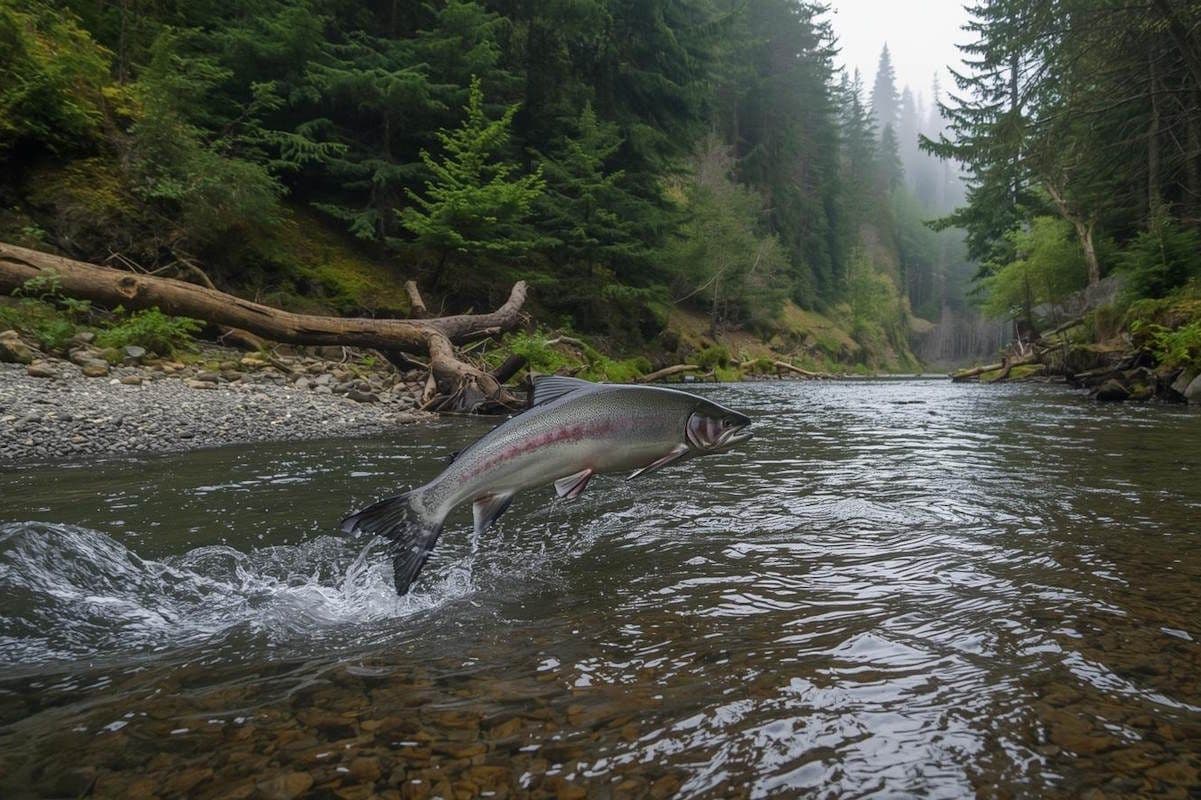

Chinook salmon are North America’s largest Pacific salmon species, known for their impressive size, migration patterns, and critical role in ecosystems. These fish can grow over 4 feet long, weigh up to 129 pounds, and migrate vast distances between freshwater and ocean habitats. Their biology shapes fishing strategies and conservation efforts. Here’s what you need to know:
- Lifecycle: Chinook are anadromous, starting life in freshwater, migrating to the ocean, and returning to spawn.
- Habitat Needs: They thrive in cold, clean water and are sensitive to temperature changes.
- Growth: Larger fish are found in cooler northern waters, with growth tied to diet and time spent at sea.
- Physical Changes: Chinook undergo dramatic transformations at each life stage, from camouflage as juveniles to vibrant colors during spawning.
- Spawning: Females build gravel nests, lay thousands of eggs, and die after spawning, enriching ecosystems.
- Migration: Guided by temperature and flow, their journeys face challenges like warm waters and climate shifts.
- Diet: Juveniles eat insects and plankton, while adults hunt fish, squid, and crustaceans.
- Reproduction: They return to their birthplace to spawn, using chemical cues, with varied tactics ensuring population diversity.
- Ecological Role: They support wildlife, enrich watersheds, and sustain food webs.
- Conservation: Threatened by habitat loss, pollution, and climate change, efforts include dam removal, habitat restoration, and stricter regulations.
Chinook salmon are vital to ecosystems and economies, making their conservation a shared responsibility. Understanding their biology helps anglers fish responsibly and protect this iconic species.
Facts: The Chinook Salmon
1. Anadromous Life Cycle
Chinook salmon have a fascinating journey that takes them from freshwater to the ocean and back again. Their life begins in freshwater streams, where adult salmon create gravel nests, known as redds. Here, the females lay their eggs, which remain in the gravel throughout the winter. These eggs develop into alevins, tiny fish that stay hidden in the gravel and survive on the nutrients stored in their yolk sacs.
Once the yolk sac is fully absorbed, the young salmon emerge as fry. At this stage, they start feeding on small aquatic insects and plankton. Over time, they develop into parr, easily recognized by the vertical stripes and spots on their bodies that provide natural camouflage. Chinook fry typically stay in their birthplace for less than five months before progressing to the next stage.
The transformation to smolts marks a critical turning point. During this phase, juvenile salmon undergo significant physiological changes to prepare for the shift from freshwater to the saltwater environment of the ocean. This adaptation equips them for the next chapter of their remarkable journey.
2. Habitat Range and Preferences
Chinook salmon, with their intricate anadromous lifecycle, have specific habitat needs that are essential for their survival and conservation. These needs are increasingly under threat, posing challenges for both the species and the ecosystems they inhabit.
For starters, water temperature plays a major role in their well-being. The ideal range for Chinook salmon is around 50°F, with a tolerance between 42°F and 60°F. Temperatures outside this range can disrupt their migration patterns and weaken their ability to resist diseases. Warmer waters, in particular, lead to lower oxygen levels, changes in food availability, and compromised immune systems, leaving them vulnerable to illness. These temperature sensitivities highlight the difficulties they face in adapting to changing environmental conditions.
For spawning, Chinook salmon rely on clean, fast-moving streams with gravel bottoms. However, human activities like logging, agricultural runoff, urban expansion, and stormwater pollution have severely degraded these habitats. Blocked access to spawning grounds is another major issue. Dams and poorly designed culverts not only limit their movement but also disrupt natural water flows, further reducing water quality. Despite Washington State investing billions in fish passage projects, Chinook populations continue to decline, prompting discussions about removing dams to aid their recovery.
Marine environments add another layer of complexity. Factors like surface temperature and salinity influence their survival by affecting food availability, predator interactions, and migration routes.
Climate change compounds these challenges. Rising temperatures, increased winter flooding, and reduced water flows during summer and fall have led to earlier maturation and a decline in the number of larger individuals. These environmental pressures underscore the interconnected challenges Chinook salmon face throughout their lifecycle.
3. Size and Growth
Chinook salmon hold the title as the largest Pacific salmon species. Adults usually tip the scales between 20 and 50 pounds, though some giants can surpass the 100-pound mark. In terms of length, most measure 28 to 36 inches, with a few exceptional specimens stretching over 4 feet.
Their growth rate depends heavily on their life stage and surroundings. During their freshwater juvenile phase – which lasts anywhere from 3 months to 2 years – growth is relatively slow. This period is all about preparing for life in the ocean. But once they hit the marine environment, things change quickly. The abundance of high-energy prey like anchovies, sardines, and krill leads to a growth spurt.
Chinook can spend anywhere from 1 to 8 years at sea. The longer they remain in the ocean, the larger they grow, with fish spending 4–5 years at sea often reaching trophy sizes.
Geography also plays a role in their growth. Northern populations, such as those in Alaska, tend to grow bigger than their southern relatives. Cooler waters and richer marine ecosystems in the north provide the perfect conditions for rapid growth. These patterns are more than just interesting – they’re useful. Anglers can use this knowledge to fine-tune their approach, from choosing the right gear to planning trips in the best locations at the perfect time. Understanding these growth dynamics also sets the stage for appreciating the incredible transformations Chinook undergo throughout their lives.
4. Physical Changes During Life Stages
Chinook salmon go through striking transformations at different life stages, allowing them to adapt and thrive in various environments.
As juveniles in freshwater, known as parr, Chinook display unique markings that act as camouflage. These include 6 to 12 vertical parr marks along their sides, a square-shaped anal fin, and a dark leading edge on their dorsal fin. These features help them blend into their freshwater surroundings, increasing their chances of survival.
When transitioning to saltwater during a process called smoltification, these markings begin to fade. Smolts develop a dark back and a lighter belly, a coloration that helps them avoid predators in open water. At the same time, their bodies undergo key physiological changes, such as reduced urine production and modified gill function to handle saltwater. These adaptations prepare them for life in the ocean.
Once they reach the ocean, adult Chinook take on a new appearance. Their backs turn blue-green, their sides become silvery, and their bellies are white. Black spots appear on the upper parts of their bodies and on both lobes of their tail fin. A distinctive black pigment along their gum line has earned them the nickname "blackmouth".
As they prepare to spawn, Chinook undergo yet another dramatic transformation. Their shiny, silvery ocean colors fade, replaced by shades ranging from olive brown to red, purplish, copper, or even black. Males often take on more vibrant red tones, while females tend to appear gray. Spawning males also develop a hooked upper jaw, called a "kype", along with larger teeth and, in some cases, a humpbacked profile. Females, by contrast, maintain a more streamlined, torpedo-like shape with a thicker midsection and a blunt nose.
These physical changes are so pronounced that Chinook in their ocean phase and spawning phase can seem like entirely different fish. For anglers, understanding these transformations offers valuable clues about the salmon’s behavior and lifecycle.
5. Spawning Behavior
Chinook salmon have fascinating spawning behaviors that not only ensure their reproductive success but also play a role in shaping fishing strategies.
Nest Construction and Site Selection
Female Chinook salmon create nests, known as redds, in gravel beds. These depressions are typically 12–18 inches deep and can stretch up to 6 feet long. Females are quite particular about where they spawn, choosing spots with clean gravel, consistent water flow, and sufficient oxygen levels to support their eggs. The ideal conditions include gravel sizes between 0.5 and 4 inches in diameter, water depths of 1 to 4 feet, and flow speeds of 1 to 3 feet per second. These factors help oxygenate the eggs and remove waste, creating the best chance for survival.
Courtship and Mating Rituals
Male Chinook salmon take part in intense competition during mating season, staking out temporary territories near prime spawning sites. Their courtship involves swimming alongside females while quivering and showing off their vibrant spawning colors. Males also undergo physical changes, such as developing a hooked jaw (called a kype) and larger teeth, which not only help them fend off rivals but also signal their fitness to potential mates.
Egg Deposition and Fertilization
When the moment arrives, the female positions herself over her redd, with a dominant male close by. She can release anywhere from 3,000 to 14,000 eggs, which the male fertilizes as she carefully covers them with gravel. This precise and coordinated process marks the culmination of their reproductive efforts.
Post-Spawning and Lifecycle Completion
Spawning is the final chapter in the Chinook salmon’s life cycle. The grueling journey and effort to spawn leave the salmon physically depleted, leading to their death shortly after. However, their decaying bodies play a vital role in enriching freshwater ecosystems, providing nutrients that support the environment where the next generation of salmon will grow.
sbb-itb-c29b239
6. Migration Patterns
Chinook salmon are known for their impressive migrations between freshwater streams and the open ocean. These journeys are guided by a mix of environmental factors that influence both timing and success. Let’s dive into the key drivers and challenges that shape these migrations.
Juvenile Migration Triggers
Young Chinook salmon, called smolts, begin their migration downstream during spring. Research conducted on the Nechako River in British Columbia has shown that scientists can predict the likelihood of smolts migrating on any given day with an accuracy of 93% to 99%. A major factor in this timing is the salmon’s cumulative exposure to temperature, measured as thermal units. As Gregory E. Sykes and his team noted:
"Temperature experience was more strongly linked to migration than the daily or threshold temperature; warmer temperatures resulted in earlier migration."
Interestingly, while warmer temperatures encourage earlier migration, higher river flows tend to delay it. Sykes, along with Chris J. Johnson and J. Mark Shrimpton, explained:
"Our data suggest that flow plays an important role once migration is under way and may even serve as a termination cue."
This balance helps ensure that smolts encounter suitable conditions as they make their way downstream.
Adult Migration Challenges
Adult Chinook salmon face significant hurdles as they return to freshwater to spawn. High water temperatures and strong river currents can cause "en route mortality" (death during migration) and "prespawn mortality" (death before spawning). In the Columbia River Basin, the annual prespawn mortality rate for female Chinook salmon has varied widely, ranging from 0% to 65% over a 14-year period. Spring-run Chinook salmon are especially at risk, with warmer August stream temperatures increasing the chances of females dying before they can lay eggs.
Climate Change Impacts
Looking ahead, climate change adds another layer of complexity to Chinook salmon migration. Rising stream temperatures are expected to increase prespawn mortality rates by 0–17% for wild Chinook and 1–17% for hatchery fish by 2040. Matthew L. Keefer and Christopher C. Caudill highlighted this concern:
"Warm stream temperatures increased female Chinook salmon prespawn mortality (i.e., mature salmon died prior to laying eggs)."
These changes could have serious consequences for salmon populations, especially as conditions continue to shift.
Implications for Anglers and Management
A clear understanding of Chinook salmon migration patterns is essential for both sustainable fishing practices and conservation efforts. By accounting for temperature and river flow dynamics, managers can better predict salmon runs and implement strategies to support healthier populations. In watersheds with controlled flows, adjusting spring temperatures and water levels can improve the success of smolt migrations and boost adult returns.
7. Diet and Feeding
Chinook salmon undergo a fascinating transformation as they grow, shifting from relying on internal yolk sacs as hatchlings to becoming skilled ocean predators. Understanding these dietary patterns not only sheds light on their ecological role but also helps anglers select the best lures.
Early Life Nutrition
Newly hatched Chinook salmon, known as alevins, don’t need to search for food right away. They stay nestled in stream gravel, surviving solely on the nutrients stored in their attached yolk sac. This vital energy source sustains them during their first, fragile weeks of life.
Once the yolk sac is fully absorbed, the young salmon, now called fry, emerge from the gravel and begin actively feeding. At this stage, their diet consists mainly of small aquatic macroinvertebrates. As they grow, they start consuming plankton, along with both aquatic and terrestrial insects. This early dietary shift marks their progression from passive reliance on internal nutrients to active foraging, laying the groundwork for their eventual transition to ocean life.
Preparing for Ocean Life
As smolts, Chinook salmon make their way to estuaries, where they feed to build up the energy reserves needed for their journey into the ocean. This period is also crucial for adapting to the changing environmental conditions.
Ocean Predators
Once they reach the ocean, adult Chinook salmon become formidable hunters, primarily preying on other fish. Their main targets include herring, pilchards, and sand lance. They also feed on squid and various crustaceans, showcasing their adaptability and opportunistic feeding habits.
Freshwater-Only Populations
For Chinook salmon populations that remain in large freshwater systems, such as the Great Lakes, the dietary progression is similar but involves different prey. Juvenile salmon feed on plankton and insects, while adults shift to eating baitfish like alewives and smelt. These dietary patterns are key for anglers looking to refine their techniques based on the salmon’s stage of life and environment.
Feeding Strategy Evolution
As Chinook salmon grow, their diet evolves from small invertebrates to larger prey, mirroring their development into powerful predators. Anglers can use this knowledge to their advantage – smaller lures that mimic insects are ideal for juveniles, while larger lures resembling baitfish are more effective for catching adult salmon, whether in freshwater or the ocean.
8. Reproductive Strategies
Chinook salmon have developed various reproductive strategies to increase the chances of survival for their offspring. These fish return to the streams where they were born, using the unique chemical signature of their natal waters as a guide. These strategies not only help sustain their populations but also respond to different environmental challenges.
Spawning Timing and Location Selection
Chinook are known for their remarkable ability to return to the exact gravel beds where they hatched. The timing of their spawning depends on the population. Some salmon enter freshwater months before they spawn, while others wait until closer to the spawning season to make their journey.
Reproductive Tactics and Fertilization
Female Chinook create nests, called redds, and lay anywhere from 3,000 to 14,000 eggs, with larger females typically producing more eggs. Male salmon use different approaches to fertilize these eggs. The larger, dominant males defend territories around spawning females, while smaller males, including "jacks" (early-maturing males), employ sneaky tactics to fertilize eggs. These varied methods help maintain genetic diversity in the population.
Parental Investment and Death
Chinook salmon are semelparous, meaning they spawn only once before they die. After spawning, their decaying bodies provide critical nutrients to freshwater ecosystems, supporting other species and enriching the environment.
Genetic Adaptation Strategies
Chinook populations have evolved distinct strategies for their young. Stream-type juveniles remain in freshwater for an extended period before heading to the ocean, while ocean-type juveniles migrate to the ocean shortly after hatching. These differences improve their ability to adapt to varying habitats and offer anglers valuable insights when planning trips in line with conservation efforts.
9. Ecological and Economic Importance
Chinook salmon play a crucial role in maintaining both the health of ecosystems and the economies of the regions they inhabit. These fish contribute to forest health, support diverse wildlife, and fuel local economies, making them indispensable to both nature and human communities.
Ecosystem Engineers
When Chinook salmon return to freshwater to spawn, they bring with them essential nutrients from the ocean. After spawning, their decaying bodies release these nutrients into the surrounding environment, enriching the soil and waterways. Animals like bears and eagles further spread these nutrients as they carry salmon carcasses inland, creating a ripple effect that benefits the entire ecosystem.
Food Web Foundation
Throughout their lives, Chinook salmon are a key part of the food web. Young salmon provide sustenance for birds, marine mammals, and larger fish, while adult salmon runs feed predators like brown bears, bald eagles, and orcas. The timing of these salmon migrations even influences the behavior and reproductive cycles of many predator species, showcasing their deep connection to the natural world.
Economic Impact and Tourism
Chinook salmon runs are a major driver of both commercial and recreational fishing industries. These seasonal migrations create jobs, from fishers to local businesses like tackle shops, lodges, and guiding services. Additionally, salmon runs draw tourists who contribute to the economic vitality of coastal communities.
Cultural and Subsistence Value
For Indigenous communities along the Pacific Coast, Chinook salmon hold profound cultural and practical significance. For thousands of years, these fish have been a key food source and a central part of traditional ceremonies and practices. Many Native American tribes rely on treaty rights to ensure continued access to this essential resource, preserving both their heritage and their livelihoods.
The role of Chinook salmon extends far beyond their habitats. From sustaining wildlife to supporting human economies and traditions, their importance highlights the need for conservation efforts. Protecting these fish ensures the survival of ecosystems and communities that depend on them.
10. Conservation and Habitat Challenges
Chinook salmon face a range of human-caused threats that jeopardize their survival. For anglers and conservationists who value this iconic species, understanding these challenges is key to ensuring their protection for future generations.
Habitat Loss and Dam Construction
Dams are one of the most significant obstacles for Chinook salmon. They block access to critical spawning grounds and disrupt natural river flows. Hydroelectric dams, in particular, release cold water from deep reservoirs, which can throw off migration timing and interfere with the salmon’s natural navigation cues. Beyond these physical barriers, water quality often declines near dams, adding another layer of risk for these fish.
Water Quality and Pollution
Pollution from agricultural runoff and urban development poses a serious threat to Chinook salmon. Runoff introduces harmful substances like pesticides, fertilizers, heavy metals, and other chemicals into waterways, reducing oxygen levels and contaminating the environment where salmon live.
Logging near streams compounds the problem by removing trees that provide shade and organic matter vital for aquatic ecosystems. Without this natural canopy, water temperatures can rise to levels that are too high for salmon, especially during the summer months. This combination of pollution and habitat degradation makes survival increasingly difficult.
Climate Change Impacts
Climate change amplifies the challenges Chinook salmon face. Rising ocean and river temperatures reduce oxygen levels, creating stress at every stage of their life cycle. Ocean acidification further disrupts the food chain by threatening the small organisms that young salmon depend on for nourishment.
Shifts in precipitation patterns add to the problem. Some areas are experiencing more frequent droughts, while others face increased flooding. These extreme conditions can destroy spawning beds and disrupt the delicate balance salmon need to complete their life cycle.
Overfishing and Bycatch
Fishing pressures also play a role in the decline of Chinook salmon populations. Although regulations have become stricter, overfishing remains an issue in certain regions. Commercial fishing operations often unintentionally capture salmon as bycatch when targeting other species. Even recreational catch-and-release practices can harm salmon, particularly during their vulnerable spawning runs.
Current Conservation Efforts
Efforts to protect Chinook salmon have gained momentum through measures like the Endangered Species Act, which has safeguarded populations in areas such as California’s Central Valley and the Snake River system. These protections have led to habitat restoration projects, dam removal initiatives, and tighter water use regulations.
Solutions like fish ladders and other passage structures aim to help salmon bypass dams, though their effectiveness can vary depending on the life stage of the fish. Hatchery programs also supplement wild populations in some regions, but they raise concerns about genetic diversity and competition with naturally spawning fish.
Conservation groups are working with private landowners to restore streamside habitats, remove barriers, and improve water quality. While these efforts offer hope, they require consistent funding and widespread community support to make a lasting impact.
Addressing the challenges Chinook salmon face demands a collaborative approach, involving government agencies, conservation organizations, and individual anglers. Protecting these fish means understanding how human activities affect every stage of their journey – from ocean feeding grounds to the mountain streams where they spawn.
Conclusion
Exploring the biology of Chinook salmon unveils the intricate nature of these fish and highlights their vital role in both marine and freshwater ecosystems. Their anadromous life cycle, spanning vast distances, and their precise spawning behaviors provide a wealth of knowledge that can lead to better fishing practices, improved conservation strategies, and a deeper respect for one of North America’s most iconic species.
Understanding key aspects like migration timing, feeding habits, and habitat needs equips anglers to fish more effectively while respecting the salmon’s natural rhythms. For instance, recognizing the dramatic physical changes Chinook undergo during spawning runs helps explain why fishing regulations, such as size limits and seasonal restrictions, are tailored to align with their reproductive cycles and population health.
Chinook salmon serve as a keystone species, enriching entire watersheds with marine nutrients and maintaining ecological balance as both predator and prey. Their significance extends far beyond the waters they inhabit, emphasizing the importance of thoughtful conservation efforts.
Anglers can actively contribute to these efforts by adopting ethical fishing techniques, supporting habitat restoration projects, and staying up-to-date with ever-changing regulations. Obtaining the proper licenses and permits not only ensures compliance but also channels funding directly into fishery management and conservation programs. These actions underscore the collective responsibility to care for Chinook salmon habitats.
Tackling the challenges these fish face requires a combination of scientific understanding and practical action. Anglers who take the time to learn about salmon biology not only fish more responsibly but also become advocates for the species’ protection.
This deeper understanding transforms fishing into something far more meaningful. Knowing the incredible journey Chinook salmon undertake – from the ocean to their spawning grounds – along with the energy they pour into reproduction and the hurdles they encounter, adds profound significance to every encounter with these fish. It reinforces the idea that fishing and conservation are inseparable.
FAQs
How do Chinook salmon survive in both freshwater and saltwater during their life cycle?
Chinook salmon possess an impressive ability to survive in both freshwater and saltwater environments, thanks to a biological process known as osmoregulation. This mechanism helps them regulate the balance of salt and water in their bodies as they shift between these habitats.
During the smolt stage, their gills and kidneys undergo significant changes. In saltwater, these organs work to expel excess salt, while in freshwater, they shift to conserving salts. This adaptation is crucial for their survival and enables their migrations through dramatically different ecosystems.
What are the biggest threats to Chinook salmon, and what is being done to protect them?
Chinook salmon are facing a tough battle for survival. Their challenges include habitat loss caused by logging, road construction, and water diversions. Add to that the hurdles of dams, overfishing, and the effects of climate change, and it’s clear why their migration, spawning, and overall survival are under threat.
To address these issues, conservation efforts are stepping up in a big way. Key initiatives include restoring habitats, removing dams, and upgrading fish passage systems to make migration easier. There’s also a focus on regulating water usage and reintroducing Chinook to areas they once thrived in. Protective measures are being enforced to help maintain sustainable populations. These efforts are critical to preserving this species and the essential role it plays in aquatic ecosystems.
How is climate change affecting the migration and survival of Chinook salmon?
Climate change is significantly affecting Chinook salmon by reshaping their environment and lifecycle. Warmer water temperatures and decreased stream flows are making it more challenging for salmon to spawn, while these same conditions also hinder egg development and reduce the survival rates of juveniles. Such disruptions in their habitat also interfere with their migration patterns, ultimately leading to a decline in population numbers.
On top of that, rising ocean temperatures and altered currents add further strain on adult salmon during their feeding and migration periods. Habitat loss and changes in river flow make it increasingly difficult for them to reach their spawning grounds, compounding the risks they face. Together, these challenges pose a serious threat to the long-term survival of Chinook salmon in the U.S., underscoring the urgent need for conservation efforts.