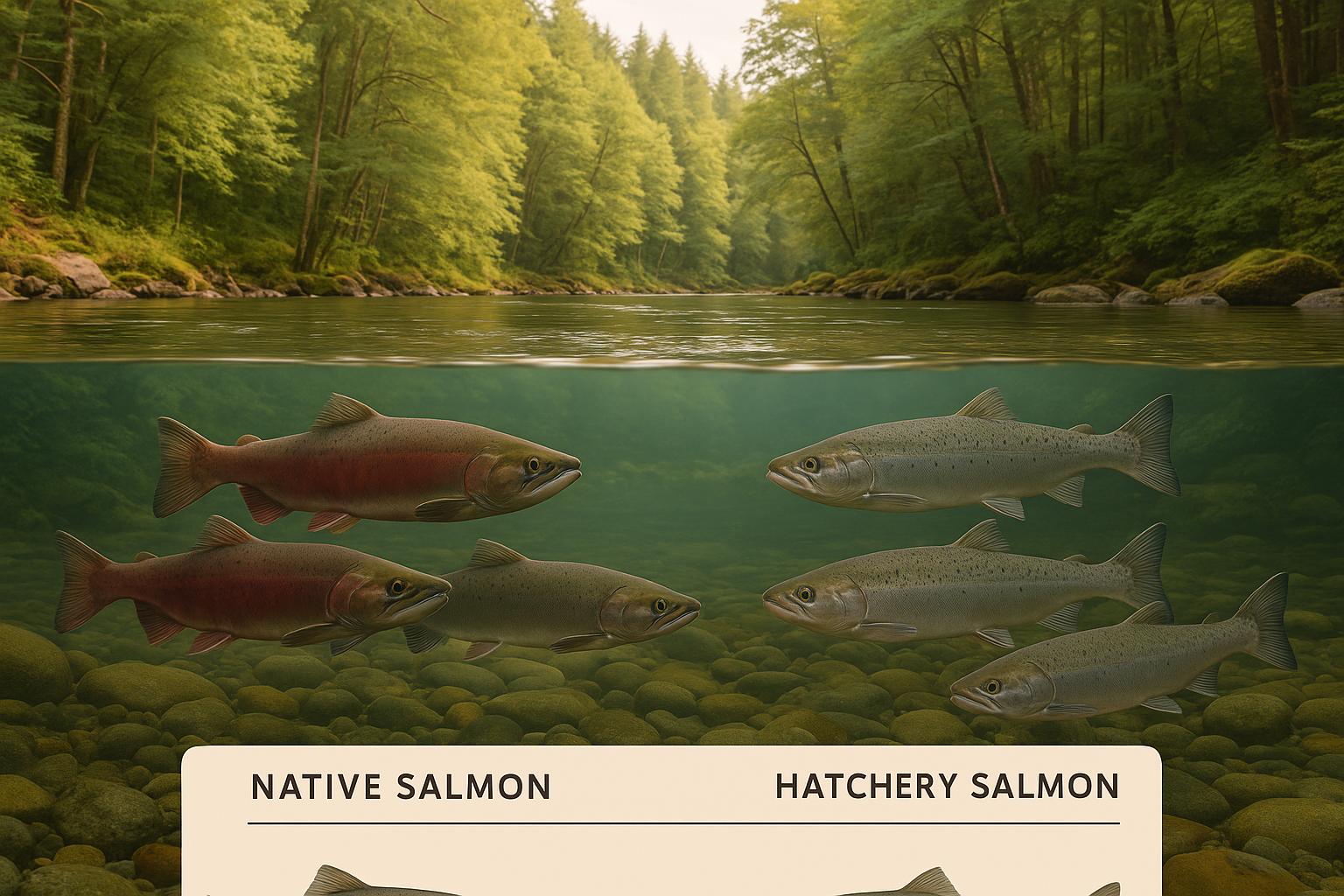
Native salmon and hatchery salmon have distinct life cycles and roles in aquatic ecosystems. Native salmon thrive in untouched rivers and streams, shaped by natural selection over millennia, while hatchery salmon are bred in controlled facilities to boost populations and support fisheries.
Key differences include:
- Native Salmon: Higher genetic diversity, stronger disease resistance, and critical to ecosystem balance. However, they face challenges like habitat destruction and lower early survival rates.
- Hatchery Salmon: Raised in controlled environments for higher early survival and reliable food sources for predators like orcas but may disrupt wild populations through competition and reduced genetic diversity.
Balancing hatchery programs with the restoration of natural habitats is crucial for sustaining salmon populations, supporting fishing industries, and protecting species like the endangered Southern Resident killer whales.
Hatchery Fish vs. Wild Fish? Native vs. Non Native? | Montana WILD | Wildlife Education
 What Are Native Salmon Habitats
Native salmon habitats are natural waterways – ranging from mountain streams to coastal estuaries – that support salmon migration and life cycles without human interference.
In the Pacific Northwest, these habitats include everything from major rivers to smaller watersheds and tributaries that flow into the Pacific Ocean. These waters maintain natural flow patterns, seasonal temperature changes, and diverse underwater features that salmon need to thrive. Unlike artificial or managed environments, native habitats offer a mix of water depths, gravel beds, fallen logs, and seasonal changes. This complexity is crucial for salmon reproduction and growth, forming the foundation of their life cycle.
Wild Salmon Life Cycle
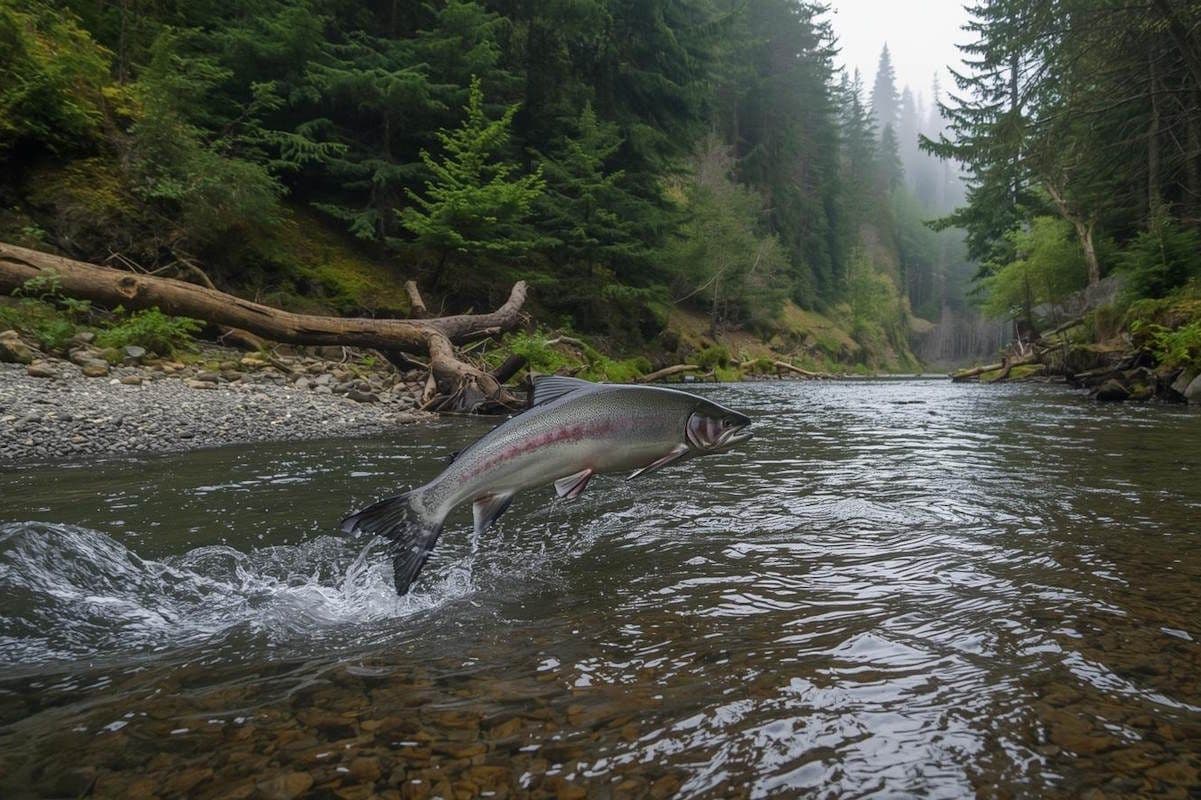
The life cycle of wild salmon begins in freshwater gravel beds. Adult salmon, guided by their remarkable homing instincts, return to the very streams where they were born, swimming upstream against strong currents. Once there, females dig shallow nests in the gravel and lay thousands of eggs.
The eggs incubate through the colder months, eventually hatching into alevin, which rely on their yolk sacs for nourishment. As spring arrives, they develop into fry. Depending on the species, young salmon may stay in freshwater for weeks or even years before adapting to life in the ocean.
Once they reach the ocean, salmon undertake extensive migrations, feeding on a variety of marine organisms. Species like Chinook salmon can spend several years at sea, building up the energy reserves they’ll need for their arduous return to freshwater to spawn and complete the cycle. This process not only sustains salmon populations but also plays a critical role in supporting the ecosystems they inhabit.
How Native Habitats Support Ecosystems
Native salmon habitats are essential bridges between marine and freshwater ecosystems, benefiting countless species. When salmon return from the ocean, they bring marine nutrients into freshwater environments. Studies show that these nutrients boost the productivity of riparian zones and promote overall ecosystem health.
As salmon decompose after spawning, they fertilize nearby soils and vegetation, creating a ripple effect of benefits throughout the food chain. These habitats also provide critical feeding opportunities for other animals. For example, wild Chinook salmon are a key food source for orcas, especially during crucial feeding periods.
The natural features of native habitats – like deep pools, shallow riffles, and fallen logs – create microenvironments that are perfect for salmon reproduction and also offer shelter and feeding opportunities for various species. These interconnected systems highlight the importance of preserving natural waterways for the health of the entire ecosystem.
How Salmon Hatcheries Work
Hatcheries offer a controlled solution to support salmon populations, stepping in where nature often struggles. By raising young salmon in carefully managed environments, hatcheries help mitigate the challenges wild salmon face during their early life stages. These facilities fine-tune conditions like water temperature, oxygen levels, and feeding schedules to give salmon a better chance of survival, especially compared to the unpredictable and often harsh conditions of natural gravel beds.
Unlike the natural spawning process, which leaves salmon vulnerable to predators and environmental shifts, hatcheries provide a safer start. The controlled care ensures higher survival rates, particularly during the most fragile stages of development. This approach has become a critical tool in salmon management, offering a reliable way to bolster populations and address ecological concerns.
Hatchery Production Process
The process begins when adult salmon are collected using fish ladders or traps. Their eggs and sperm are extracted and mixed in fertilization tanks, a method that achieves much higher fertilization rates than what occurs in the wild. Once fertilized, the eggs are placed in incubation trays where water flow and temperature (kept between 38°F and 50°F, depending on the species) are meticulously regulated. Hatchery staff monitor these trays closely to ensure the eggs develop properly.
After hatching, the young salmon, known as alevin, stay in the tanks while they absorb nutrients from their yolk sacs. As they grow into fry, hatchery workers introduce them to specially formulated feed designed to promote rapid and healthy growth. These young salmon spend several months in the hatchery, growing significantly faster than their wild counterparts.
Before they are released, hatcheries gradually acclimate the juvenile salmon to natural water conditions. This careful preparation helps them transition smoothly into the wild. Most hatcheries in the Pacific Northwest release salmon as smolts – juveniles that are ready to migrate to the ocean. By the time they are released, these smolts are typically 4 to 6 inches long, well-prepared for the challenges ahead.
Why Hatcheries Were Created
The creation of hatcheries dates back to the mid-20th century, a time when natural spawning areas were disappearing due to human activities like dam construction, urbanization, and logging. Projects like the Bonneville Dam, completed in 1937, blocked traditional salmon migration routes, causing wild populations to plummet. It became clear that natural reproduction alone couldn’t sustain salmon numbers. In response, government agencies launched large-scale hatchery programs in the 1940s, which quickly expanded in the following decades.
Hatcheries weren’t just about saving salmon – they also addressed economic needs. Coastal communities relied heavily on commercial and recreational salmon fishing, industries that suffered as wild populations declined. Hatcheries provided a way to maintain these vital economic activities by supplementing the salmon supply.
Today, hatcheries serve dual purposes. Some focus on recovering endangered salmon species, while others aim to ensure sustainable fishing opportunities. For instance, the Washington Department of Fish and Wildlife operates over 80 hatcheries, producing around 200 million juvenile salmon and steelhead each year. These efforts support both conservation goals and the fishing industries that many communities depend on.
Native vs Hatchery Salmon Comparison
Expanding on earlier discussions about habitat and production, this section highlights the practical differences between native and hatchery salmon. These two types of salmon vary significantly in genetics, survival rates, and their impact on ecosystems.
Side-by-Side Comparison Chart
Here’s a quick overview of how native and hatchery salmon stack up against each other:
| Characteristic | Native Salmon | Hatchery Salmon |
|---|---|---|
| Genetic Diversity | High – shaped by evolution in diverse natural habitats | Lower due to limited genetic pool in breeding stock |
| Disease Resistance | Strong – developed immunity through natural adaptation | Weaker, making them more prone to pathogens |
| Early Survival Rate | Lower – reflecting challenges in the wild | Higher due to controlled rearing conditions |
| Ocean Survival | Better adapted for ocean life | Often face difficulties after release |
| Spawning Success | Highly effective in natural conditions | Struggle with spawning in the wild |
| Size at Maturity | Highly variable, depending on environment | More uniform, sometimes larger due to feeding control |
| Homing Ability | Strong – return reliably to natal streams | More likely to stray from intended spawning areas |
| Ecological Impact | Critical for maintaining ecosystem balance | Can disrupt wild populations through competition |
Benefits and Drawbacks of Each Type
Native salmon are a cornerstone of biodiversity. Their genetic diversity and natural adaptations allow them to thrive in specific environments, ensuring that spawning aligns with optimal conditions. However, they face challenges like habitat destruction and environmental shifts, which can dramatically affect their already low survival rates.
Hatchery salmon, on the other hand, benefit from controlled environments during early development, leading to much higher survival rates initially. This boost can be vital, especially in supporting predators like orcas when wild salmon numbers are low. But these advantages come with trade-offs. Hatchery fish often struggle with survival in the ocean and have reduced success when spawning in the wild. Additionally, interbreeding with wild populations can weaken genetic diversity, and large-scale releases may create competition for resources, further stressing native salmon populations.
sbb-itb-c29b239
How Hatchery Salmon Help Feed Orcas
Hatcheries play a key role in supporting the salmon population, which directly benefits marine predators like the endangered Southern Resident killer whales. When wild salmon numbers drop, hatchery-raised salmon step in to fill the gap, providing an essential food source for orcas and other predators. This additional supply is especially important for species that depend on energy-rich prey to thrive.
Why Orcas Rely on Chinook Salmon
For Southern Resident killer whales, Chinook salmon is more than just a meal – it’s a lifeline. These fish are packed with the energy orcas need to meet their demanding nutritional requirements. When wild Chinook salmon stocks decrease, the health and survival of these whales are at risk. Hatchery salmon, therefore, become a crucial backup, ensuring orcas have access to the food they need, especially during tough times.
Hatcheries as a Safety Net for Salmon Supply
When natural salmon runs falter, hatcheries step in to bridge the gap. In Washington alone, over 200 million salmon are produced annually across more than 100 facilities. Nationwide, hatcheries release an impressive 5 billion juvenile salmon each year . This large-scale effort helps maintain salmon populations that are vital not just for killer whales but for a variety of marine predators.
A striking example of hatchery success can be seen in Alaska’s Prince William Sound. Here, hatcheries have boosted pink salmon harvests from 4 million to an incredible 50 million annually. This dramatic increase highlights how hatchery programs can enhance prey availability for marine species while contributing to a more balanced ecosystem.
Fishing for Native vs Hatchery Salmon
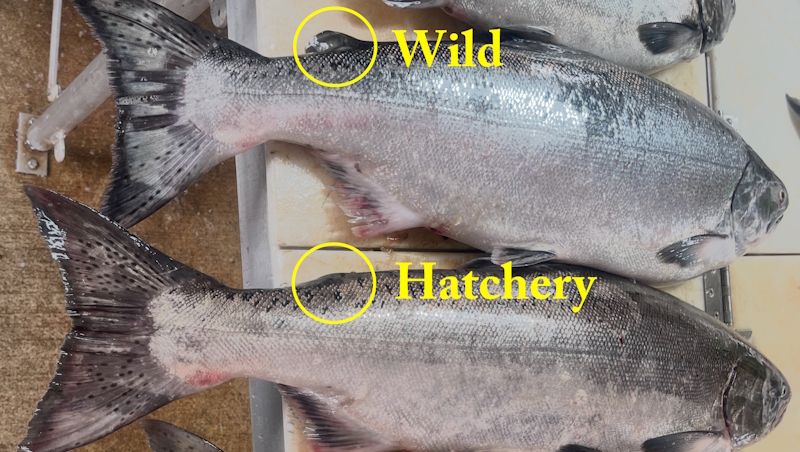
Knowing how to differentiate between native and hatchery salmon is crucial for following local fishing regulations. These rules often reflect the balance between preserving natural fish populations and managing hatchery interventions. In many regions, particularly in mark-selective fisheries, the presence or absence of the salmon’s adipose fin determines how they should be handled. Here’s a breakdown to help you fish responsibly.
Fishing Rules for Wild Salmon Areas
In areas designated for wild salmon, regulations typically allow anglers to harvest only salmon with a clipped adipose fin. Salmon with an intact fin must be released back into the water. Always check the specific rules for your location to ensure compliance with local guidelines.
Fishing in Hatchery Areas
In waters stocked with hatchery salmon, the same mark-selective rules apply. Salmon with a clipped adipose fin are marked as hatchery fish and can be harvested.
How to Identify Hatchery vs Wild Salmon
The table below provides a quick reference for identifying and properly handling hatchery and wild salmon based on their adipose fin.
| Fish Type | Adipose Fin | Fishing Outcome |
|---|---|---|
| Hatchery Salmon | Clipped/Removed | Can be harvested in mark-selective fisheries |
| Wild Salmon | Intact | Must be released in mark-selective fisheries |
 Long-Term Salmon Recovery Plans
Bringing salmon populations back to sustainable levels requires a combination of immediate hatchery support and long-term natural habitat restoration. Focusing solely on human-managed production isn’t enough. A balanced approach that integrates hatchery efforts with habitat restoration is essential for meaningful recovery. This strategy ties back to the interplay between native salmon and hatchery-raised fish discussed earlier.
Hatcheries play a crucial short-term role by boosting fish numbers in struggling ecosystems. Meanwhile, habitat restoration lays the groundwork for wild salmon populations to thrive independently, without human interference. The pitfalls of excessive hatchery reliance highlight why restoring natural habitats is so critical.
Problems with Too Many Hatchery Fish
Relying heavily on hatchery fish can harm wild populations in several ways. For one, it decreases genetic diversity, which weakens the resilience of wild salmon. Crowded hatchery conditions also increase the risk of disease outbreaks. These diseases can spread to wild salmon, which often lack immunity to pathogens introduced by hatchery fish.
Competition for resources is another major issue. When hatchery fish are released in large numbers, they often outcompete wild salmon for food and prime spawning sites. This can lower the survival rates of wild juveniles and disrupt natural reproduction cycles.
Behavioral differences between hatchery and wild salmon further complicate recovery efforts. Hatchery-raised fish tend to be less cautious around predators and may struggle to navigate natural obstacles, putting them at a disadvantage in the wild.
Restoring Natural Salmon Habitat
The challenges posed by hatchery overuse underscore the importance of restoring natural habitats. By addressing the root causes of salmon population declines, habitat restoration offers a long-term solution that enables wild salmon to recover and sustain themselves.
One of the most effective strategies is dam removal. Taking down dams reopens historical spawning grounds and restores natural river flows, both of which are vital for salmon migration and reproduction.
Improving water quality is another key focus. Efforts to reduce pollution, manage agricultural runoff, and minimize urban development impacts help create the clean, cold water conditions salmon need. Maintaining the right water temperature is especially critical for successful spawning and juvenile development.
Rehabilitating spawning areas by clearing excess sediment and adding gravel beds provides safe spaces for young salmon to grow. These efforts mimic the complex habitats that support natural reproduction and early survival.
Restoring riparian zones – vegetated areas along riverbanks – offers multiple benefits. Native plants provide shade to keep water temperatures cool and contribute organic material that supports the aquatic food web. They also stabilize stream banks, preventing erosion and protecting spawning areas.
While habitat restoration takes time, it builds self-sustaining ecosystems that allow salmon populations to thrive without constant human intervention. This approach strengthens salmon resilience, helping them adapt to environmental changes and maintain the genetic diversity needed for long-term survival.
Conclusion: Finding the Right Balance
The future of salmon populations hinges on combining hatchery production with habitat restoration. While no single solution can address all the challenges facing Pacific salmon, these approaches together form a recovery strategy that benefits marine ecosystems, recreational fishing, and endangered species like orcas.
Hatcheries act as a critical safety net during the period when habitat restoration efforts are still taking root. They offer immediate boosts to salmon populations and provide essential food sources for marine mammals when wild salmon numbers are too low to sustain the ecosystem. That said, the ultimate goal must always be fostering self-sustaining wild populations that thrive without ongoing human assistance. Achieving this balance supports not only ecosystem health but also the rewarding fishing experiences discussed earlier.
Carefully timed hatchery production can fill temporary gaps while habitats recover, but it’s crucial to monitor genetic diversity and phase out releases as wild spawning populations rebound.
As mentioned earlier, this balanced strategy ensures a variety of fishing opportunities for future generations. Well-managed hatchery programs offer immediate access for anglers, while habitat restoration lays the groundwork for wild salmon to return to their historical abundance. Understanding the distinctions between hatchery and wild salmon allows anglers to make more informed choices about where to fish and which catches to keep.
Maintaining this balance requires constant adjustments to respond to shifting environmental conditions. Adaptive management is key – it ensures that strategies evolve to meet the unique challenges of each watershed. What works in one area may need refinement in another, and successful programs continuously assess their outcomes.
FAQs
What effect do hatchery salmon have on the genetic diversity of wild salmon?
Hatchery salmon can influence the genetic diversity of wild salmon by introducing traits into the wild gene pool. Over time, this mixing can lead to reduced genetic variation, which is critical for the resilience and survival of wild salmon populations.
In hatcheries, salmon often experience domestication selection, where they adapt to the controlled conditions of their environment. These adaptations may differ greatly from the traits needed to survive in the wild. When hatchery-raised salmon interbreed with wild populations, it can further shift the genetic composition of wild salmon, potentially impacting their ability to thrive. This underscores the need for thoughtful management of hatchery programs to maintain conservation goals and ecological balance.
What are the environmental benefits of restoring native salmon habitats compared to using hatchery programs?
Restoring native salmon habitats plays a vital role in preserving the natural genetic diversity of wild salmon. This diversity is key to helping salmon adapt to shifting environmental conditions, ensuring their survival for generations to come. Beyond the salmon themselves, these habitats contribute to healthier ecosystems by maintaining natural food webs and easing competition between wild salmon and hatchery-raised fish.
These habitats also support the salmon’s natural life cycle, which has ripple effects across both marine and terrestrial ecosystems. For example, species like orcas depend on robust salmon populations as a primary food source. By restoring these habitats, we’re not just helping salmon but also fostering more resilient ecosystems that benefit a wide array of wildlife.
How can I tell the difference between native and hatchery salmon, and why does it matter?
You can often spot hatchery salmon by their clipped fins, most commonly a missing adipose fin. This small fin, located on their back near the tail, is intentionally removed to set them apart from wild salmon, which have all their fins intact.
This distinction is important because wild salmon are not just free-roaming fish – they are genetically distinct and play a key role in preserving the balance of natural ecosystems. Hatchery salmon, however, are raised in controlled settings to bolster fish populations and serve as an additional food source for predators like orcas. Knowing how to tell them apart allows anglers to support conservation efforts and make more sustainable fishing decisions.